Hot Workflow Software Trend in 2022
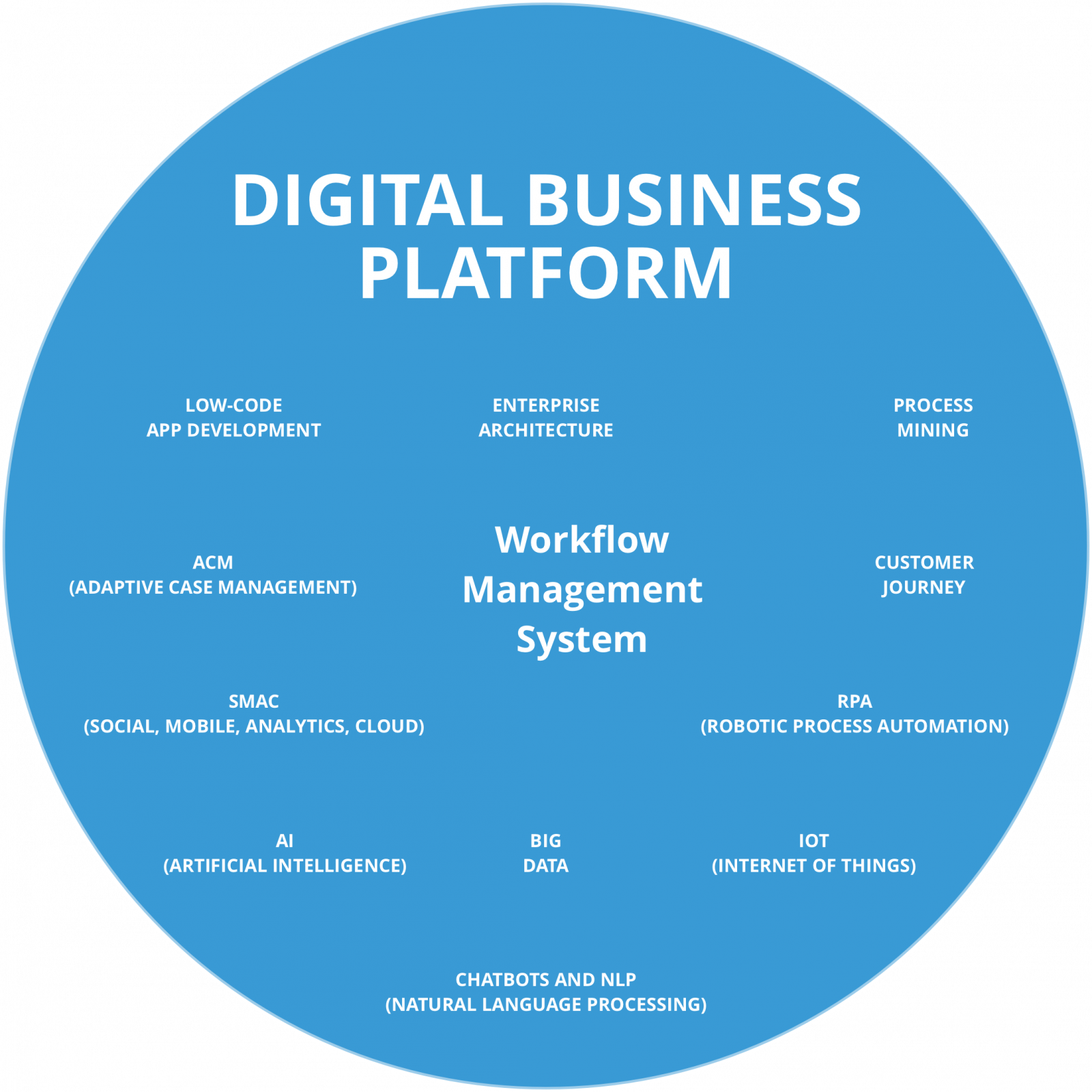
Hyperautomation is a business-driven, disciplined approach that organizations use to rapidly identify, vet and automate as many business and IT processes as possible. It involves the orchestrated use of multiple technologies, tools or platforms. GartnerHyperautomation, which is a huge 2022 trend, brings together technologies like Artificial intelligence (AI), Machine learning, Robotic process automation (RPA) and a vast range of decision, process and task automation tools. It’s hard to imagine a future where all these technologies still operate independently and low-code platforms with advanced workflow management features don’t play a crucial role – they definitely will. In 2022 a powerful workflow management and BPM (business process management) systems become the control center of your successful hyperautomation strategy. A workflow system orchestrates all of the employees and technologies that complete that entire sequence of tasks autonomously and make sure all the resources work together effectively. So, you can easily deploy any of the hyperautomation technologies mentioned above at any waypoint in the workflow and be sure that the entire process will keep generating expected results. So, in 2022 a low-code workflow software, like CMW Tracker, is the beating heart of your hyperautomated, traceable and effective business.
The Key Workflow Software Trend in 2021
In 2020 we highlighted that businesses are switching to a new document management approach and prefer to handle data in document cards instead of getting stuck in scan copies or Word files. This trend stays actual in 2021 as surely as the trend of migrating to an integrated digital business platform instead of standalone applications. The key workflow software trend in 2021 worth your attention is the technology “democratization”. This trend emerged in the 20th century when Apple introduced the Macintosh with a radically new user interface. Do you still remember that at the dawn of the personal computer era users controlled the machines via text commands? Since then, everyone’s got a device that can even respond to your voice commands and help whenever you need it to. Nowadays low-code and no-code technology democratization expands and empowers non-IT professionals to discover and effectively apply specialized skills beyond their expertise. Right now, low-code platforms are a basis supporting the democratization trend to put the power of digital tools into the hands of non-technical users (often named “citizen developers”), so they could develop and design business apps, gain knowledge from expert systems, and do even more. For instance, technology democratization would enable employees to automate workflows without having programming skills. They would instead rely on a low-code / no-code platform like CMW Tracker to generate the business app and ensure proper workflow operation. The synergetic effect of the recent technology democratization and integrated digital business platform adoption trends is rapidly bringing us into the new world:Smart spaces build on the people-centric notion. A smart space is a physical environment in which people and technology-enabled systems interact in increasingly open, connected, coordinated and intelligent ecosystems. Multiple elements — including people, processes, services and things — come together in a smart space to create a more immersive, interactive and automated experience.David Cearley, vice president and Gartner Fellow. Specializes in emerging and strategic business and technology trends and explores how these trends shape the way individuals and companies derive value from technology


Workflow Software Trends in 2020
Documents Without Documents
The paperless office mantra has made executives’ mouths sore and a significant number of them claim that their companies started heading toward digital transformation and became paperless or lowered their paper footprint. It brings tangible benefits, but many executives report that changing paper-based documents to digital versions in MS Excel or Word doesn’t make enough difference for business. On the way to the much quicker document approval processes businesses tend to consider modern workflow management systems capable of processing data effectively during the approval process, obviating the document exchange steps. For example, in CMW Tracker you can create a document template with all necessary data fields and get the document automatically generated when all data is reviewed and approved by a proper person. Such an approach dramatically improves and speeds up the approval process and fuels digital transformation.Switching From Standalone Solutions to Platforms

Workflow Software Trends – 2019
A workflow may be a simple sequence of work activities or a complicated collection of processes that take place in parallel. During the past few years, executives realized that workflow automation is vital for business competitiveness, and the BPTrends Report confirms this fact. Year after year businesses report that integrating a workflow management system capability within the company’s methodology can bring tangible and even impressive overall efficiency gains and cost savings. No surprise that companies report their intention to increase spendings on business process management and workflow automation:| How do you expect our organization’s investment in BPM technology is going to change over the course of the next two years? | ||
| 2017 | ||
| Increasing by more than 100% | 9% | 16 |
| Increasing by less than 100% | 46% | 84 |
| Unchanging | 40% | 73 |
| Decreasing by less than 50% | 4% | 7 |
| Decreasing by more than 50% | 2% | 3 |
| Totals | 100% | 183 |
The State of the BPM Market – 2018 BPTrends Report
In recent years the business world has been inundated with talk about the benefits of innovative features needed in the right workflow management solution. In 2019, workflow management matured. Now businesses stop thinking in terms of features when choosing a workflow management system and instead focus on strategic advantages a solution delivers. More businesses are looking to embrace digital transformation, which means blending digital and physical business while improving operational efficiencies and performance. If you’re among the businesses working to reimagine and enhance existing processes, open the door to dynamic, agile workflows and build a digital strategy. Here are the strategic workflow trends to consider in 2019:Trend 1 – Transforming Customer and Employee Experience
Unarguably, when a person gets used to the convenience of mobile apps for hotel, ride, or flight booking they will never accept the old experience. Expectations from interfaces and overall service experience rise. So, serving customers the usual way would kill your company’s competitiveness. Meanwhile, 84% of organizations working to improve customer experience report an increase in revenue (Dimension Data). Not surprisingly, Gartner surveys confirm customer experience is the new battlefield, with 89% of businesses expectedly soon to be competing mainly on customer experience. In the meantime, employee expectations rise too, and serving employees in an old-fashion way will ruin their loyalty, resulting in high employee turnover and related costs.New employees who went through a structured onboarding program were 58% more likely to be with the organization after three years.
SHRM Presentation” by The Wynhurst Group
Taking into account new employee expectations, many companies build an automated onboarding process supported by workflow management software to streamline and speed up the employee assessing, hiring, training, and onboarding workflows. It is also worth noting that in addition to a modern onboarding process employees expect to have a one-stop shop for IT-, HR-, procurement and other internal services. So, there’s a trend to converge user-friendly interfaces, easy access from various devices, customer mapping, artificial intelligence, and many other features in concert to serve customers and employees in an ever-improving way. When choosing a workflow management tool, make sure that it is capable of supporting your service improvement initiatives.
Trend 2 – Synergy of RPA and Workflow Management
RPA (Robotic Process Automation) is gaining momentum as bots can be leveraged quickly and can displace humans in low-level and redundant work. According to Deloitte Global RPA Survey, 53% of respondents have already started their RPA journey and the benefits of RPA adoption are significant across multiple dimensions including:- improved compliance (92%)
- improved quality/accuracy (90%)
- improved productivity (86%)
- cost reduction (59%)
Trend 3 – The Shrinking IT Department Role
In the digital era, the IT department still plays an important role in every company. Meanwhile, according to Gartner Research, the modern IT infrastructure is very different from the one used in the 90s. As more business solutions, including workflow management tools, run in the cloud, have more user-friendly interfaces, and allow no-code changes to the solution business logic, there’s no longer a need to rely on the IT department for all the IT tasks. Modern workflow management software is expected to ensure that employees with basic IT skills can address most of their issues and build workflow applications quickly. A 2017 low-code adoption survey shows that in three-fourths of companies at least some business apps are developed by the civil developers, not the IT departments.Conclusion
CMW Lab is the company behind one of the most powerful no-code workflow software on the market. With CMW Tracker, you can easily create workflow graphical models, define role-based access, and design workflow patterns with tremendous flexibility. Furthermore, you get features like form pre-filling, easy-to-use status views, and powerful reporting, all in a cloud solution that takes away the worry of on-site server and software maintenance.Look ahead by looking back
Below you will find a retrospective look at our evolving understanding of the must-have workflow solution features, which have progressed as new technologies have matured.Workflow software features you needed in 2018
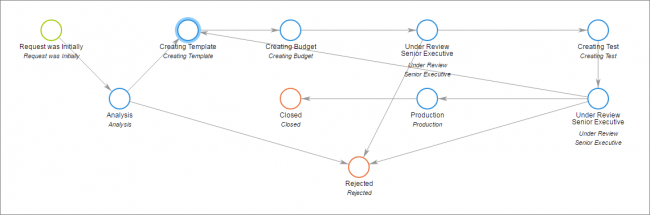
1. Easy-to-use Graphical Workflow Builder The first step to understanding and potentially streamlining a process is to create a graphical model of the process. It is a formal description or a diagram that defines the process steps and each step’s results. Intuitive visual modeling is one of the most valued workflow management software (WMS or WfMS) features. With a graphical model, you can see the process and activity definitions, resources, individual and department roles, along with the expected outputs from all process steps. By capturing and depicting the process flow, you get all team members on the same page and help everyone understand why they’re doing their tasks. Here is an example of a workflow created in CMW Tracker with simple drag-and-drop:
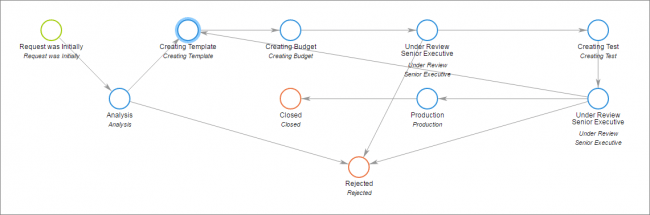
The right workflow management system keeps everyone in the loop and makes tracking complex projects easier.

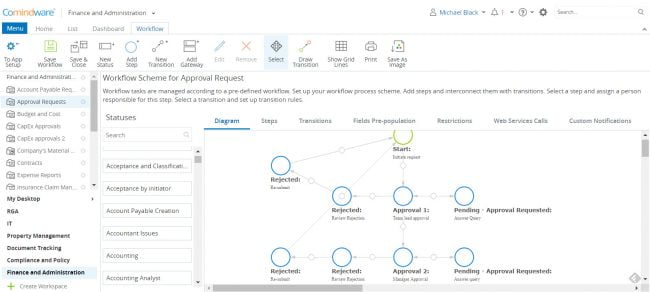
Create your workflows and quickly change them on the fly and without coding using a visual workflow builder.

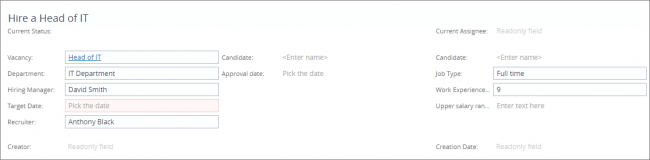
Pre-filled forms go a long way toward streamlining work processes.
Workflow software features you needed in 2017
1. Easy-to-Interpret Task Status Visual Representation Workflow management software (WMS or WfMS) should let project or workflow participants check on task status at any time. Features like automatic email alerts, which can tell the next person in a sequence that the process is ready for their input, help keep things on track. But being able to check at any time whether a particular step has been accomplished can save a lot of time and phone calls to project participants asking the step statuses. Knowing where everyone is in a workflow helps your team members plan their activities effectively, for maximum efficiency in executing the workflow steps.
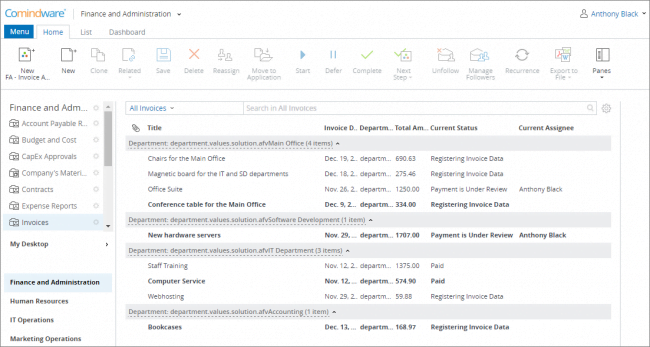
Enjoy task flow transparency and get full control over daily activities

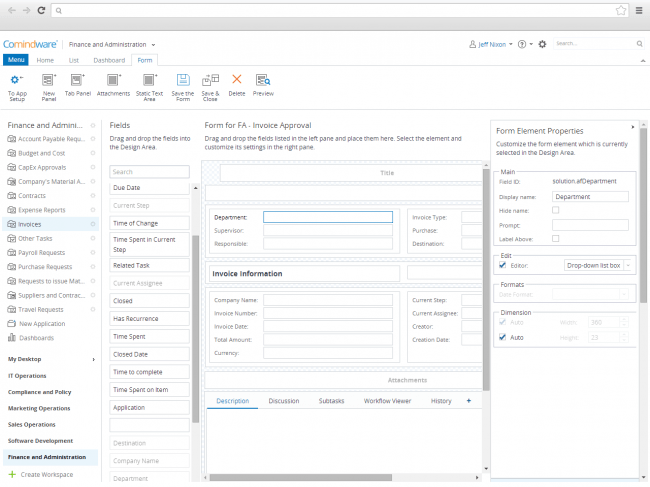
Create as many fields as needed, add tables, group related fields into sections, and empower your forms with business rules.

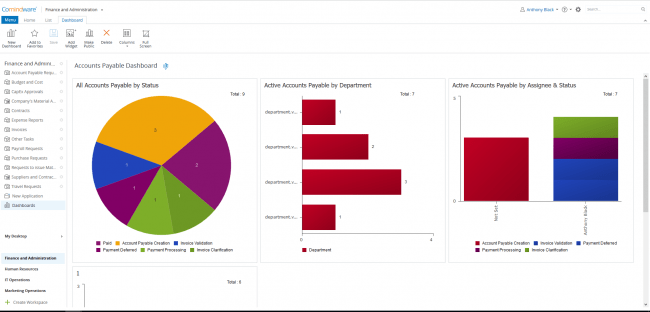
A role-based dashboard of your workflow management system adds value