Operational intelligence uses current operational data to help people understand a situation and decide what to do while the decision still matters. It connects observations with analysis and a response. For a business team, the practical test is whether a signal arrives in time, reaches someone who can act, and leads to a result the team can check.

A fresh dashboard can contain an old signal
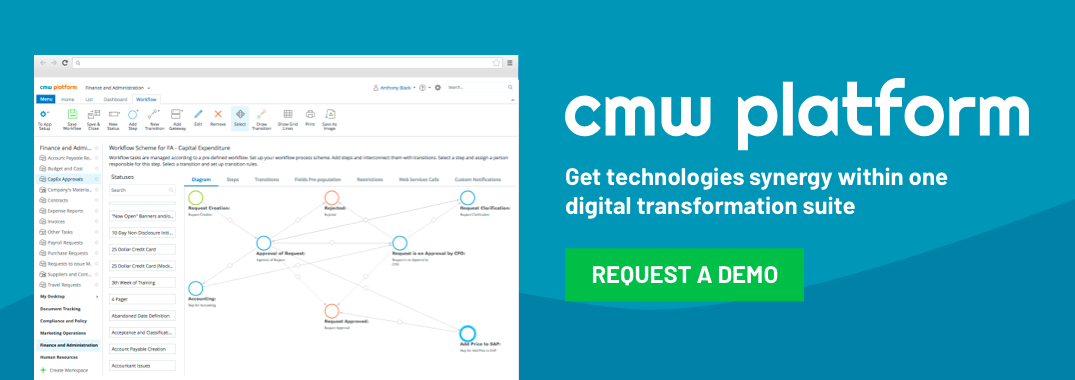
Imagine a fictional service team watching requests awaiting assignment. At 10:20 UTC, its dashboard displays a count of 18 requests and turns the queue indicator red. The rule configured for this example is to alert the duty coordinator when more than 15 requests are unassigned. These numbers are invented teaching assumptions, not recommended thresholds or customer results.
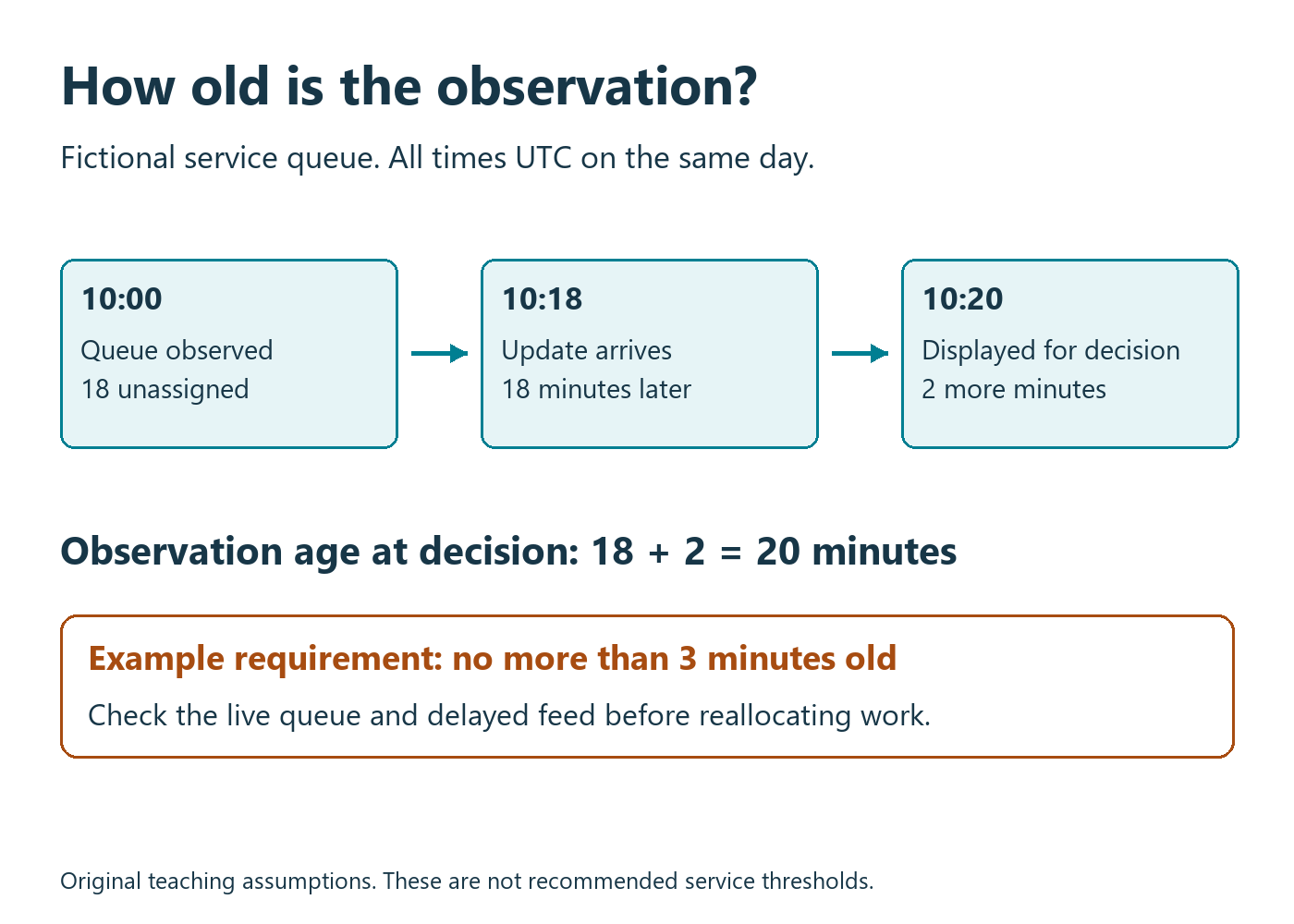
The coordinator prepares to move work to another team. Before acting, she checks the observation time. The count describes the queue at 10:00. The data reached the analytics service at 10:18 and appeared on the dashboard at 10:20. Several requests may already have been assigned during those twenty minutes.
The screen refreshed recently, but that alone does not make the underlying observation current. At the decision time, the observation is 20 minutes old. In this simplified example, the source-to-arrival interval is 18 minutes and the arrival-to-display interval is two minutes. Treating only the display refresh as the delay would miss most of the age.

Microsoft’s Stream Analytics documentation distinguishes application or event time from arrival time. That distinction is useful beyond that product: record what each timestamp means before interpreting an operational signal. Clock synchronization and timestamp quality also matter when comparing systems.
For this team’s assignment decision, the configured freshness requirement is no more than three minutes. The 10:00 observation fails that requirement at 10:20. The coordinator checks the live queue and the delayed feed before reallocating work. Another process could tolerate a different delay; freshness should follow the decision’s time window.
Write down the decision the signal is meant to support
A useful operational intelligence design starts with a specific decision. “Show queue performance” is too broad to establish what data is needed or what someone should do. “Decide whether to reassign currently unassigned requests before the next dispatch” gives the design a concrete purpose.
For the fictional service team, the decision record reads as follows:
Observation: the number of open, unassigned requests in the service queue, with the observation time and the latest successfully received update. Requests already assigned or closed do not belong in this count.
Rule: alert above 15 only when the observation meets the three-minute freshness requirement. A delayed or missing feed creates a data-quality warning, not an assumption that the queue is empty.
Owner: the duty coordinator. The alert includes the queue, its observation time, and a link to the work that can be reviewed. A handover identifies the next responsible person when the coordinator’s shift ends.
Permitted response: inspect current requests and available capacity, then reassign work within the team’s authority. A high count does not by itself establish that another team has capacity or that every request can move.
Result to check: whether the selected requests received valid assignments, whether the update reached the operational view, and whether the receiving team can complete the work. Record the action separately from the later observation so that an alert being acknowledged is not mistaken for the issue being resolved.
This record connects the data with a decision and an accountable response. It can also reveal that an alert is unnecessary: if nobody can act before the next routine review, a periodic report may serve the need more simply.
Place intelligence between the observation and the action
Collecting events, calculating a measure, and presenting it are parts of the design. The analysis adds context: which work is affected, whether the change is unusual for this period, how reliable the feed is, and what response is available. Different questions may call for threshold rules, correlations across sources, or more advanced analysis.
AWS’s operational intelligence overview describes current operational data collection, processing, analysis, and responses. Its examples include IT and industrial operations. Sumo Logic’s explanation emphasizes monitoring, correlation, and information that helps operators act. Neither definition makes an attractive dashboard sufficient by itself.
The service example does not require a predictive model. Its immediate problem is a delayed observation reaching a time-sensitive decision. Adding a forecast to that feed would not remove the need to understand data age. Start with the information needed for the decision, then evaluate whether more complex analysis improves the response.
Operational intelligence and business intelligence overlap. Historical analysis might help a manager plan staffing for next month, while the coordinator needs current information for today’s dispatch. The distinction here is the decision and its timing. A BI system may also support current operational decisions, so product categories do not create a rigid technical boundary.
Similarly, process mining can reconstruct routes and analyze execution history from event data. A current queue alert alone does not reconstruct those routes. The two methods can inform each other, but they answer different questions in this scenario.
Rehearse the response before turning on more alerts
Replay the queue example with a delayed update, an unavailable source, and a repeated notification. Check whether the coordinator sees the data-quality problem, whether the same situation creates redundant tasks, and whether a shift change leaves an alert without an owner. State what happens when an update arrives out of order rather than letting arrival order silently define reality.
Then test the normal response. Start with a current observation, let the coordinator make a permitted reassignment, and confirm that the assignment and its later status can be checked. Compare the operational result with the decision’s purpose. More acknowledged alerts do not necessarily mean less unfinished work.
Automatic responses need equally clear conditions, permissions, and limits. If the freshness requirement fails or the proposed reassignment exceeds the team’s authority, the system should follow the defined exception route. Decide which cases need human review before connecting the signal to an action.
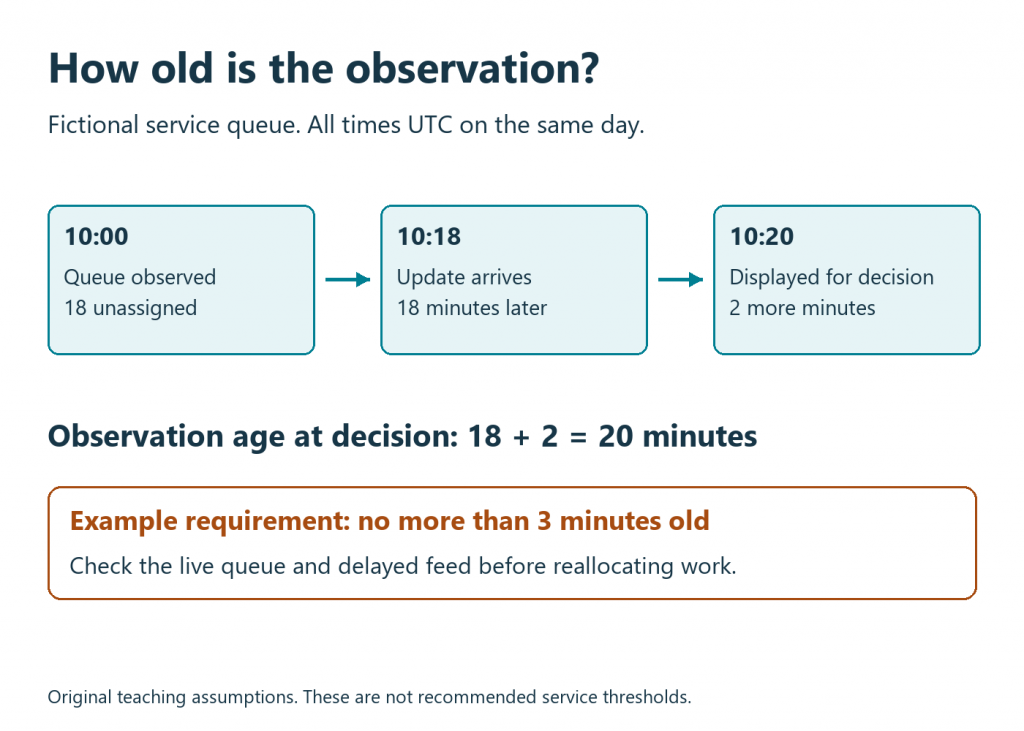
For a workflow team, CMW’s process analysis and monitoring offering is a starting point for discussing visibility into work and its measures. During evaluation, verify the actual data sources, refresh intervals, ownership rules, and response configuration needed for your decision. Streaming analytics and source integrations require their own technical validation.


About the author
Pavel Grebeshkov
Pavel Grebeshkov has more than 15 years of experience in IT projects. His background includes CMO roles at CMW Lab and Familoop, bringing a marketing perspective to the needs of business software buyers and vendors.
He is the CEO of Softosaur, a platform for the B2B software and IT community. His articles on the CMW Lab blog focus on workflows, business processes, and the practical questions teams face when evaluating business software.